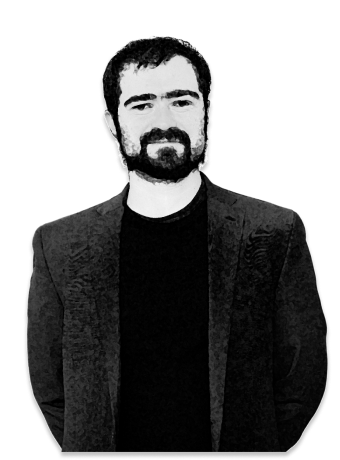
Ambitious protocols fail when infrastructure can't keep up. I make sure it does.
People expect gRPC is faster than REST for blockchain workloads. I benchmarked it across Go, Rust, and Python. REST wins until you hit 50 concurrent workers. That's how I work: measure first, then optimize what matters.
9 years building infrastructure for power grids serving millions. Now applying that discipline to blockchain protocols — 6 merged PRs to Hedera (5.6x performance improvement) and active contributions to Lightning Labs' taproot-assets and loop.
What I Do
I optimize distributed systems that can't afford to fail. My background is in SCADA systems for electrical utilities: infrastructure where downtime affects millions of customers. Now I'm applying that production discipline to blockchain protocols and high-performance backends.
5.6x performance improvement in Hedera's protocol buffer implementation
gRPC vs REST benchmarking across Go, Rust, and Python for Hedera workloads
HCS replay library for realistic load testing with real network timing patterns
Contributing to consensus node APIs and developer experience
Experience
AspenTech OSI (2015-2024)
Senior Software Engineer - Platform Server & Distribution Management Systems
Built and optimized mission-critical power grid control systems for utilities serving millions of customers:
- • Real-time data processing for utilities serving millions
- • High-availability distributed systems with strict reliability requirements
- • Performance optimization and database tuning
- • DevOps champion for build process modernization
Open Source Contributions
Hedera (6 Merged PRs) • Lightning Labs (5 PRs)
Contributing to Hedera's PBJ library, Hiero Consensus Node, Hiero SDK, and Lightning Labs' taproot-assets and loop:
- • DirectBufferedData optimization achieving 5.6x throughput improvement
- • Fixed TLS session resumption security vulnerability in Go SDK
- • Configurable network topology API for consensus nodes
- • Custodian daemon error observability and gRPC status code standardization
- • Retry and reorg handling for static address withdrawals
- • Secure Secret type for database credential handling
Why Protocols
I spent 9 years building SCADA systems for power utilities — infrastructure where downtime means blackouts. I know what it takes to build systems that can't fail.
Last year I made a deliberate choice: to apply that experience to protocols I actually believe in. I want my engineering work to align with what genuinely excites me: decentralization, sound money, and the infrastructure that makes them possible.
So I started contributing to Hedera's open source codebase. My first significant PR achieved a 5.6x performance improvement in their protobuf serialization. I'm always interested in connecting with teams building serious blockchain infrastructure.
Tech Stack & Education
- BS Mathematics & Computer Science, Minor in Economics • AWS Solutions Architect Associate
Featured Projects
Lightning Labs: Taproot Assets & Loop
Contributing to Lightning Network infrastructure with Lightning Labs. Custodian daemon error observability (#2070, merged), GenesisInfo in asset group responses (#2130), gRPC status code standardization (#2112), retry and reorg handling for static address withdrawals (loop #1134), secure Secret type for database credentials (loop #1131). Authored design gist for phased RPC error code standardization.
gRPC vs REST Performance Benchmark
Rigorous protocol performance analysis for Hedera-style financial infrastructure. Found gRPC delivers 17-18% higher throughput and 22% better tail latency at 50+ concurrent workers, but REST actually wins at low concurrency. Multi-language clients (Go, Rust, Python) isolate transport overhead from SDK costs. Includes real Hedera testnet validation showing rate limiting and network latency dominate protocol choice at the network layer.
Hiero HCS Replay Library
Go library that captures real message timing from Hedera Consensus Service topics and replays them for realistic load testing. Solves the problem that synthetic load generators miss the bursty traffic patterns that cause production failures. Zero external dependencies, 91.7% test coverage, MIT licensed. Built for the Hiero Apex Hackathon with on-chain proof of functionality.
Hedera Network Analytics Dashboard
ETL pipeline and Dune Analytics dashboard for Hedera network metrics. Built because Dune lacks native Hedera tables. Iterated from batch processing to streaming architecture, reducing memory from 8GB to 500MB and runtime from 20+ hours to minutes. Runs daily via GitHub Actions, visualizing transaction volume, type breakdown, active accounts, and fee trends.
Hedera Hashgraph & Hiero Protocol Contributions
6 merged pull requests across Hedera's PBJ library, Hiero Consensus Node, and Hiero SDK. Achieved 5.6x performance improvement in DirectBufferedData operations, fixed TLS session resumption security vulnerability in the Go SDK, improved developer experience with better error messages and testing documentation, and added configurable network topology API.
Hedera Network Monitor
Real-time monitoring tool for Hedera network health built in Go. Dual-interface design with REST API and CLI (Cobra). Tracks account balances, network metrics, and sends webhook alerts on configurable thresholds. Integrates with Hedera SDK for direct network queries.
Token Vesting Smart Contract Platform
Full-stack Web3 platform for managing time-locked token vesting schedules. Solidity contracts with 100% test coverage (52 tests), deployed and verified on Base Sepolia and Hedera Testnet. Includes Next.js dashboard for schedule management, Go backend API with PostgreSQL caching, and CLI tools via Hardhat tasks.
AWS Cloud Infrastructure Portfolio
AWS Solutions Architect Associate with hands-on implementations across 5 architectural POCs: serverless e-commerce, data analytics pipelines (Kinesis → Athena), multi-AZ reliable infrastructure, migration strategies, and disaster recovery. Includes a production backup system implementing 3-2-1-1-0 strategy with intelligent file classification and multi-tier storage (S3 Glacier, Proton Drive, air-gapped local). All projects use CloudFormation IaC and least-privilege IAM.
Ready to see all my work?
Explore Full PortfolioTechnical Writing
I write about distributed systems, blockchain protocols, and backend engineering on my Substack.
Contributing to Bitcoin: Lightning Labs Approach →
My systematic approach to contributing to taproot-assets and loop: reading before coding, proposing design gists before large refactors, and navigating code review at protocol depth.
What I Learned From The Hedera Apex Hackathon →
Built hiero-hcs-replay, a Go library for replaying recorded message streams with timing accuracy. Placed third in the Hiero bounty track.
My First Contribution to the Bitcoin Lightning Network →
My inaugural open-source contribution to taproot-assets: fixing silent failures in asset receipt handling and lessons learned about protocol engineering.
The Invisible Heist: Quantum Computers and Crypto →
Examining "harvest now, decrypt later" attacks and post-quantum cryptography solutions for Bitcoin, Ethereum, and Hedera.
ETH Denver Week: What These Events Are Actually Like →
Firsthand observations from ETH Denver, ETH Boulder, and Hedera Dev Day. Which activities provide genuine value versus hype.
When Does gRPC Actually Beat REST? →
Benchmarking Hedera API performance across Go, Rust, and Python. gRPC wins at 50+ concurrent workers (17-18% throughput gain), but REST is faster at low concurrency.
Hedera Network Monitor →
Built a production-grade monitoring and alerting system in Go for the Hedera blockchain that tracks account balances, network health, and sends real-time alerts via webhooks.
Hedera HashGraph vs Ethereum →
Deployed the same Solidity smart contract to both networks, demonstrating Hedera's Ethereum compatibility and significantly lower transaction costs.
Building on Ethereum with Go and Next →
Documented a token vesting smart contract system: a real business use case where companies manage billions in token releases to employees according to predetermined schedules.
Building a Hedera Network Health Dashboard →
ETL pipeline for Hedera analytics on Dune. Iterated from batch to streaming, reducing memory 16x (8GB → 500MB) and runtime from 20+ hours to minutes.
My AWS Solutions Architect Journey →
From software developer to certified cloud architect. How AWS solved infrastructure problems and the path to Solutions Architect Associate certification.
Building an Open-Source Backup System →
Automating the 3-2-1 backup rule across AWS S3 Glacier, Proton Drive, and air-gapped external drives. Open-source Python tool with environment-based config.
Want to read more?
Visit My SubstackCurrent Focus
I'm interested in protocol engineering roles at companies building blockchain infrastructure, distributed systems, or financial technology platforms.
I'm also available for select consulting engagements, particularly projects involving protocol optimization, blockchain development, or high-performance backend systems.
Let's Talk
Whether you're looking to discuss protocol engineering, need help optimizing your systems, or just want to explore opportunities — I'm here to help.
Schedule a Call